The question
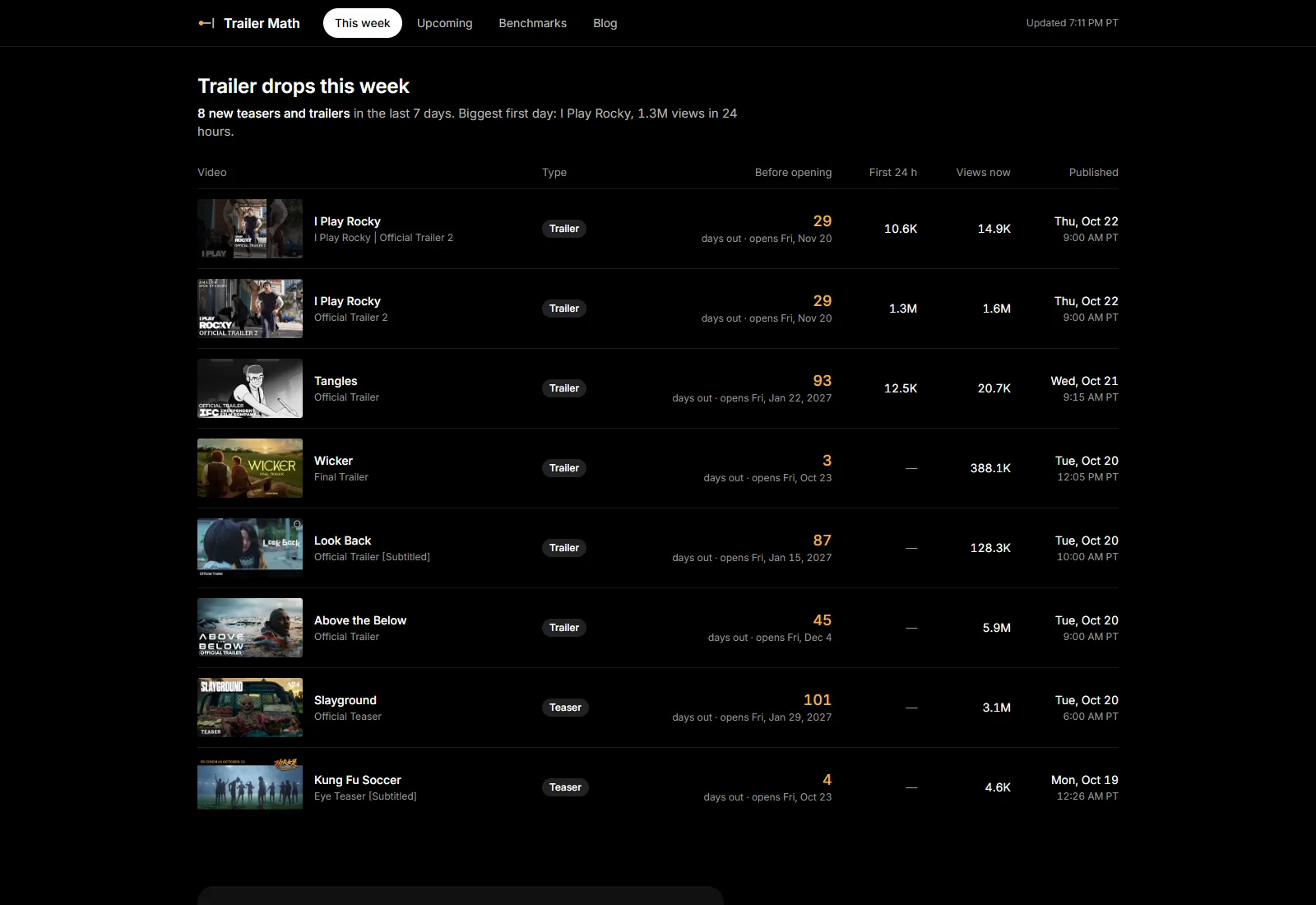
When do studios show their hand, and how does a trailer really do on day one?
Trade coverage repeats each studio's own "24-hour views", added up across every platform and channel. Nobody publishes a consistent, independent count of when campaigns start and how first days compare. So I built one.
What I built
Every hour, Trailer Math pulls US wide releases from TMDB, reads the latest uploads on 27 studio YouTube channels, and takes a snapshot of each new video's views. Every teaser and trailer is placed on its film's timeline in days before opening.
A trailer only gets a first-day number when there's a snapshot on both sides of its 24-hour mark, no more than 12 hours apart. A missing number shows as a dash, never a guess.
What it shows
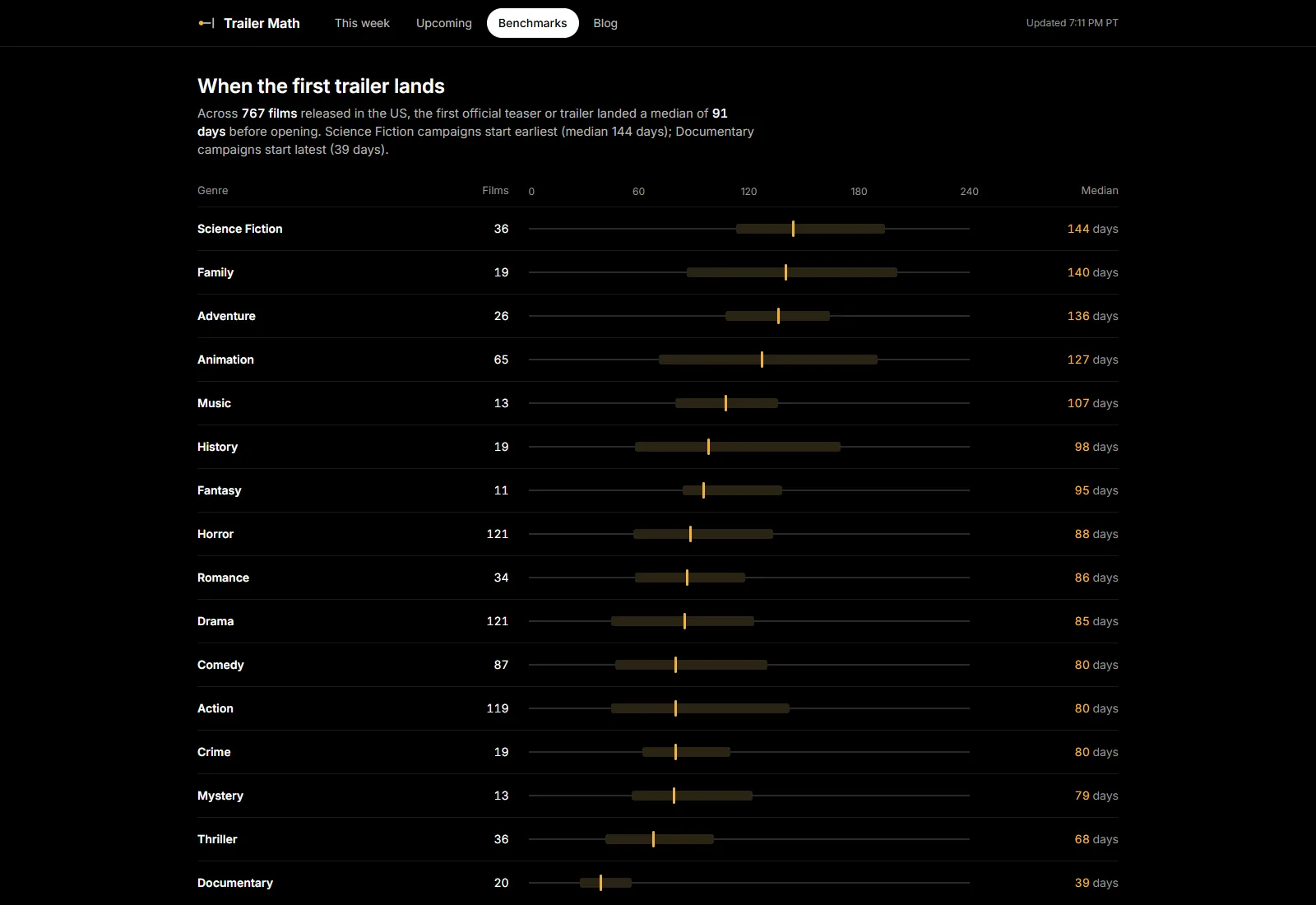
Across 758 films released since mid-2023, the first teaser or trailer lands a median of 91 days before opening. Science fiction starts earliest (144 days); documentaries start latest (39).
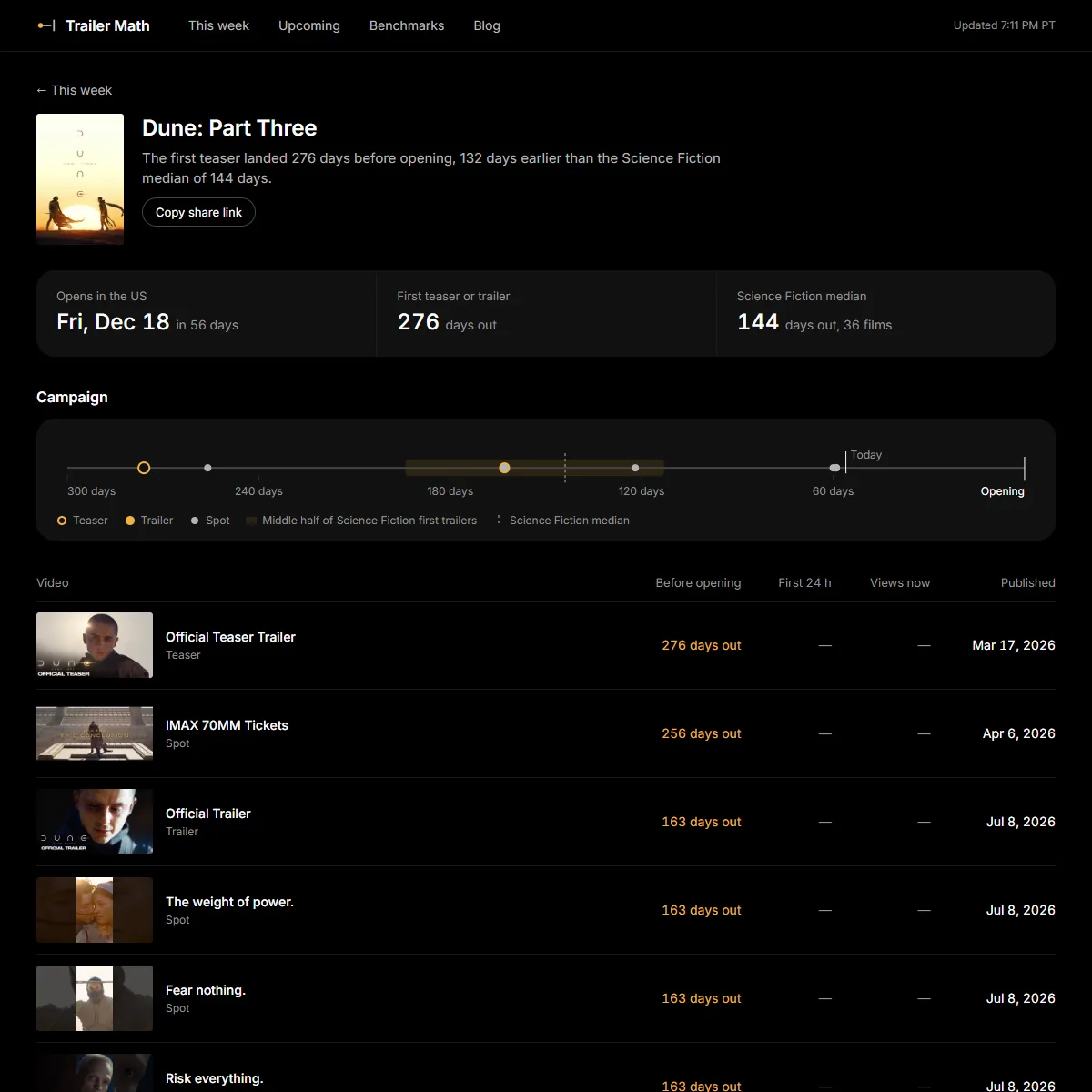
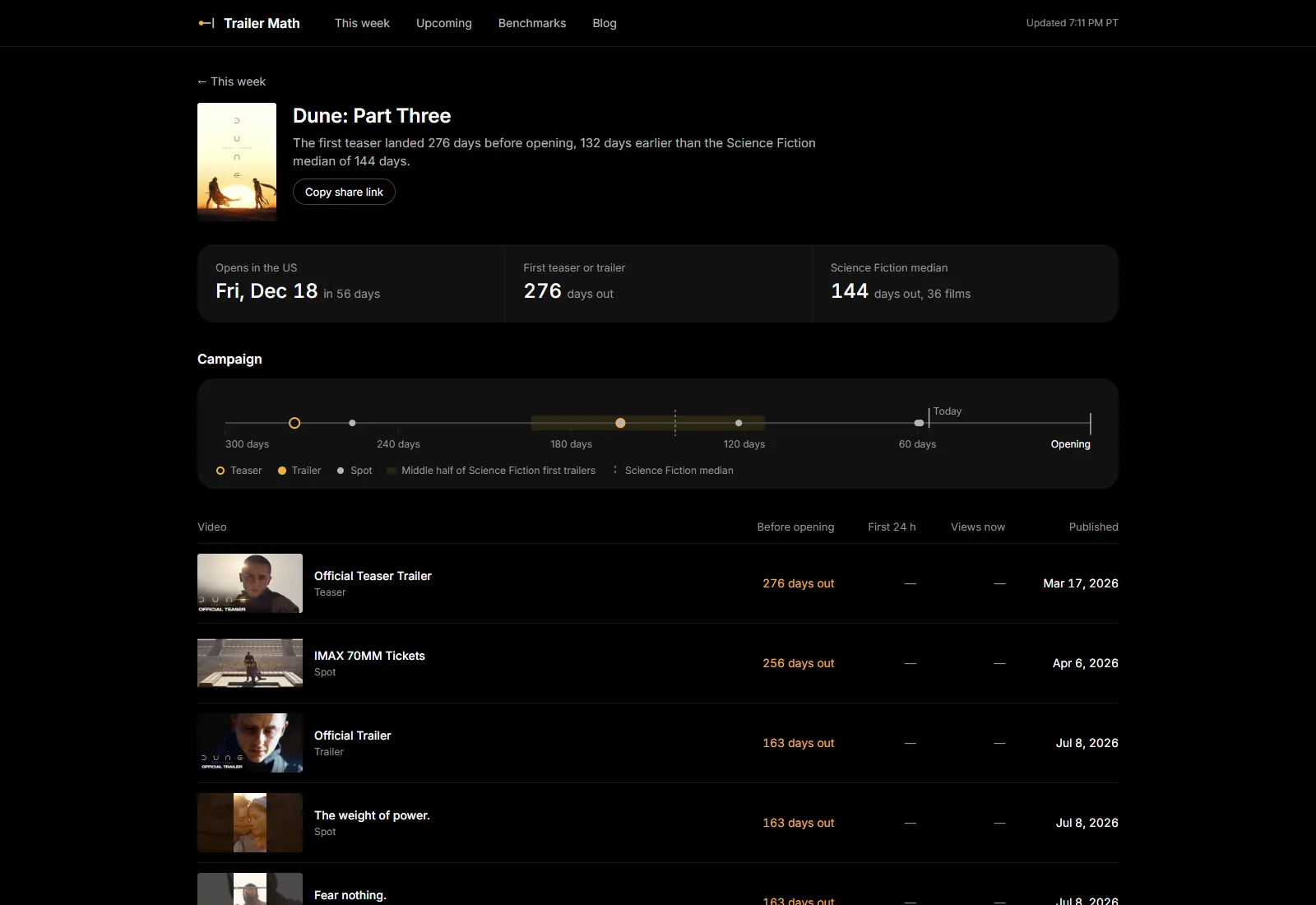
Dune: Part Three's teaser arrived 276 days out, 132 days ahead of the typical science fiction campaign.
Deciding what counts
The hardest calls weren't technical. Re-releases like Pixar's Soul, which reached US theaters in 2024, made campaigns look 1,000 days long. TV spots filed as "teasers" buried the real drops. Fixing both meant deciding what a campaign is: a film's first US wide run, and the official teasers and trailers that sell it. That's a marketing judgment, so I wrote the rules down on the site's How it works page.
The weekly habit
Every Monday there's a new blog post on one campaign, written from the numbers, and The Drop, a short newsletter with the week's trailers. The data keeps itself current; the writing is where the analysis happens.
What I'd study next
Does an earlier first trailer mean a bigger opening weekend? Pairing the 758-film benchmark with box office is the next piece of work.